Farah-Silvana Kanaan is a Lebanese-Italian-Dutch writer, [developmental]editor, curator and dramaturg based between Amsterdam and Beirut. Her work has appeared in The British Journal of Photography, Kinfolk Magazine, Discontent, Rusted Radishes, Dazed, Rolling Stone, Al-Jazeera English, Middle East Eye, The New Arab, et al. She was the guest editor for the Mare/Sea/بحر edition of Italian cultural magazine Arabpop and co-editor of Slow Factory founder Céline Semaan’s first book “A Woman is a School.” She has worked as a researcher & dramaturg on documentaries, as a (developmental) editor on photo books, hosted talks on film, and was a freelance radio, TV & print correspondent in Lebanon for 8 years. She is mostly known for her in-depth profiles of artists. Her work focuses on the politics of culture in the Global South, (de)mystifying the Arab-Mediterranean identity, and all things related to her beloved Bilad al-Sham: Lebanon, Palestine & Syria.
Selected Stories
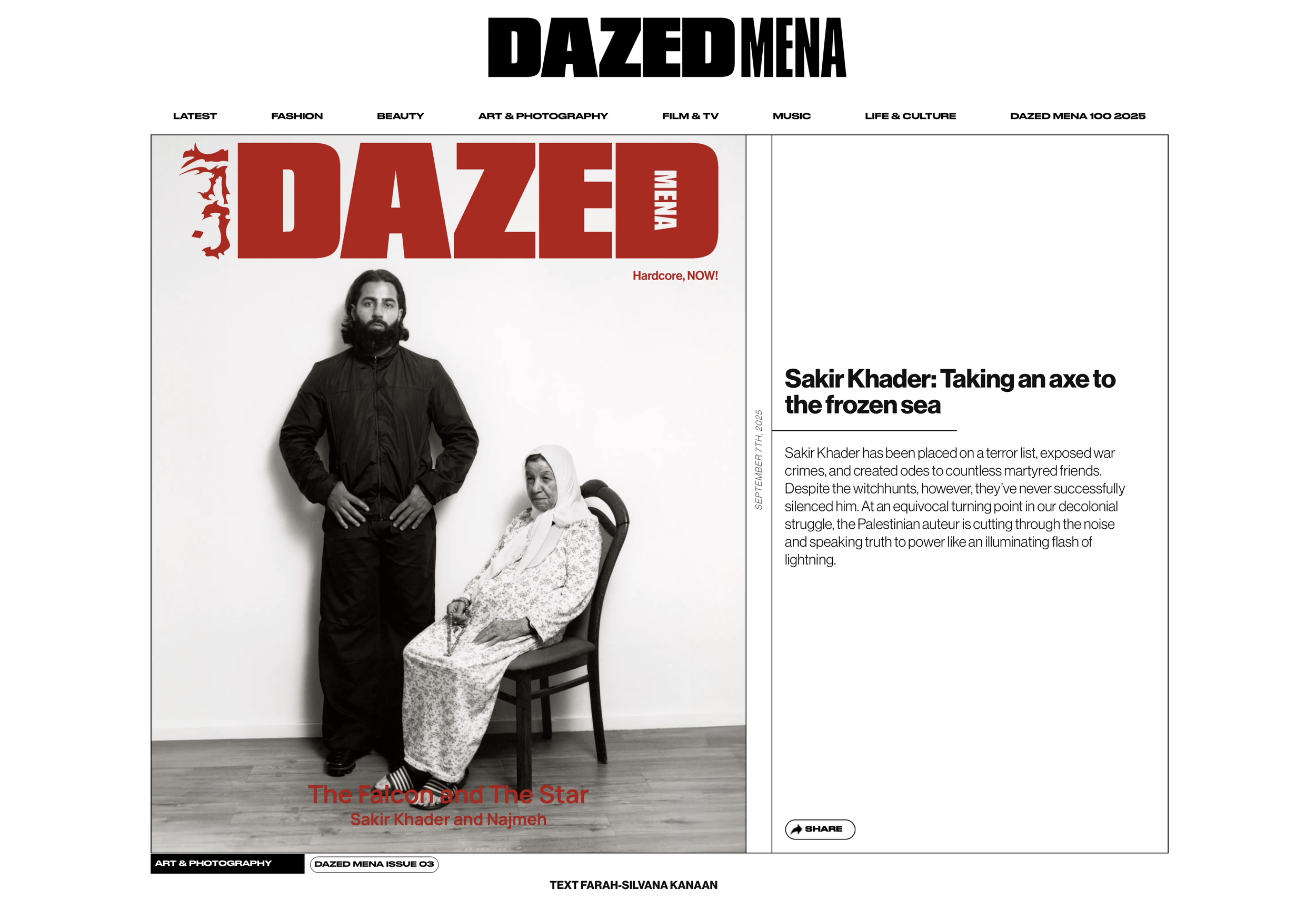
Taking an Axe to the Frozen Sea
Sakir Khader has been placed on a terror list, exposed war crimes, and created odes to countless martyred friends. Despite the witchhunts, however, they’ve never successfully silenced him. At an equivocal turning point in our decolonial struggle, the Palestinian auteur is cutting through the noise and speaking truth to power like an illuminating flash of lightning.
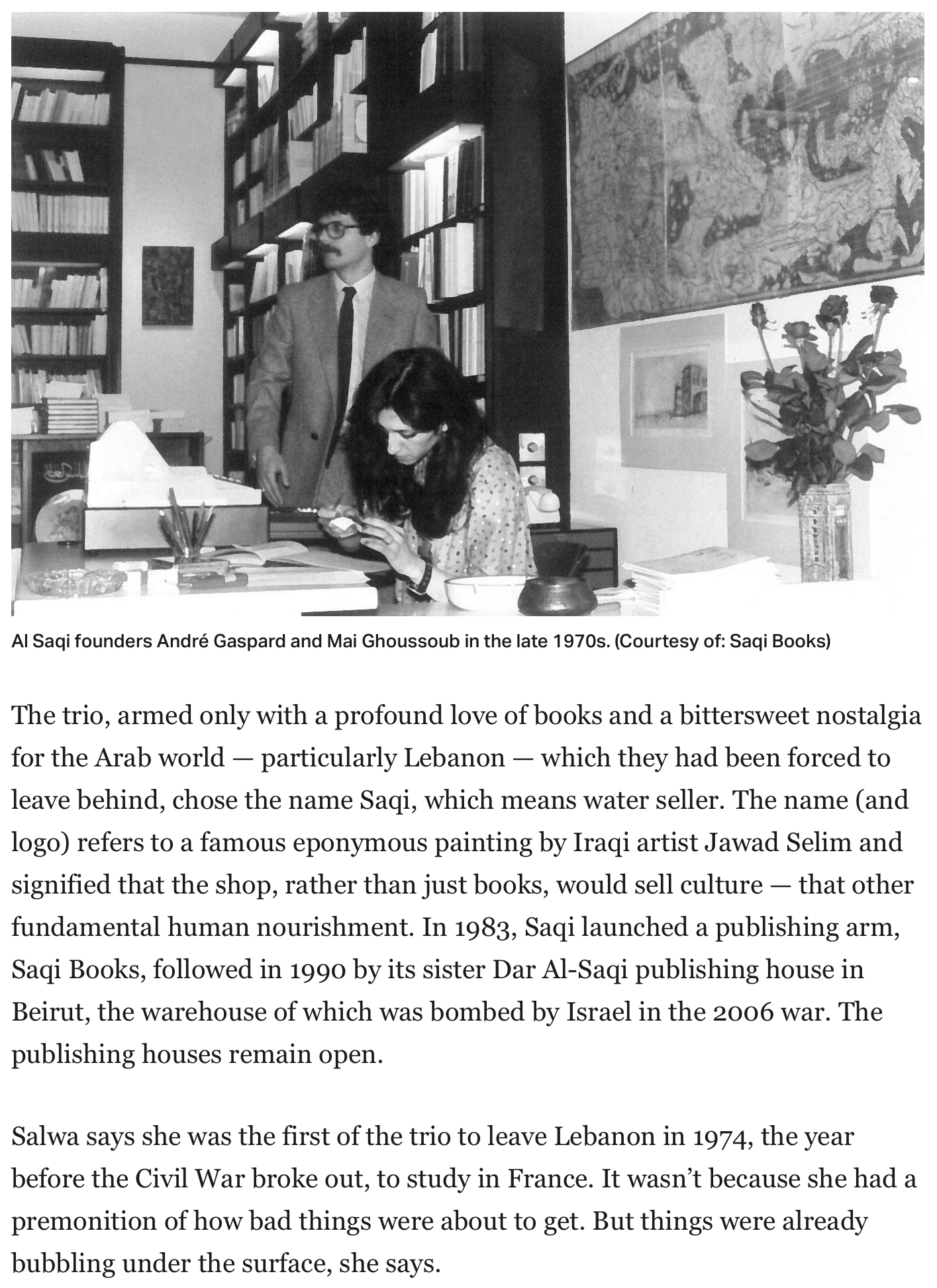
Iconic Saqi Bookshop, a Lebanese love letter to Arab books, closes after 44 years
Salwa Gaspard, a woman with big curls and an even bigger smile, is animatedly chatting with her last customer, a young woman who leaves with a big stack of books. When she spots me (I managed to sneak in), she starts telling me that the shop is closed, but then she suddenly stops and says, with glittering eyes: “Are you Lebanese? You’re wearing a cedar,” referring to the golden pendant peeking out from under my jacket. As if scripted, the bittersweet voice of Lebanese icon Fairouz softly serenades us while we chat a bit about Lebanon and loss.
Barra and Zaman: How 'The Mummy' reveals a nostalgia for Egypt's lost past
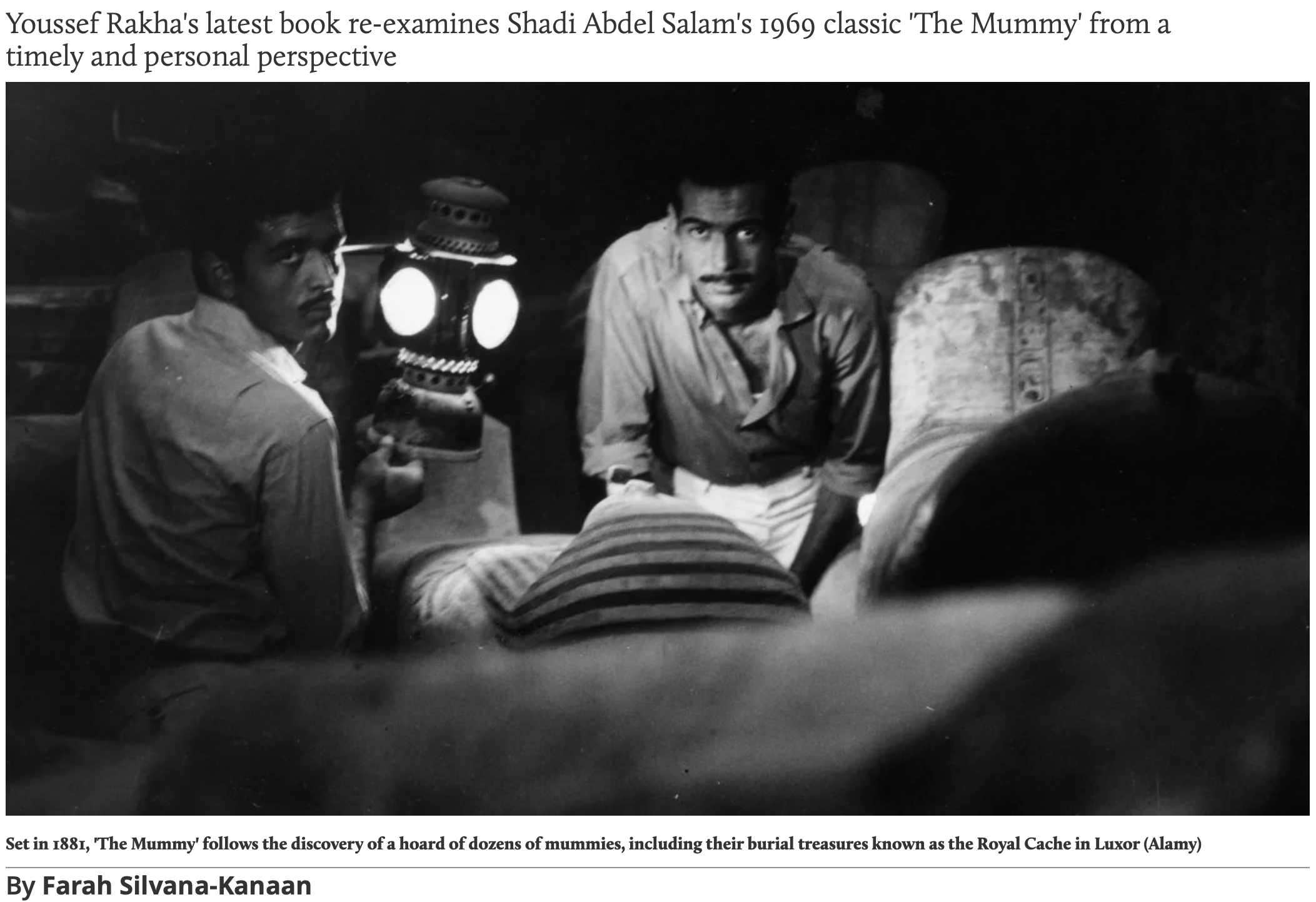
“This was really what the film was about and why the film is so fascinating,” Rakha tells MEE.
“It’s a way of bringing together these two poles of attraction that contemporary Egyptians are constantly orbiting. This sense of being orphaned, of really having no place in the world, having been born into this culture and needing to seek that place in the past.”
However, the identity that Rakha seeks to unearth, spurred on by what is unfolding on screen, is not just the Egyptian one, but also the writer’s own.
“The essay is very much about identity, as is a lot of my work, even if I try to run away from that. Because the obvious thing is that you’re born into a culture, a civilisation that is not the dominant civilisation of your time, and that immediately raises questions about your validity as a human being,” Rakha says.
“I’d like to think I’m also proposing a way of talking about identity that isn’t as narrow and politicised and activist-y as identity talk usually is these days.”
Further investigation guides him beyond Egyptian identity and his own, when he offers up the gentle realisation that cultural artefacts can open up infinite ways for all of us to wonder, negotiate and possibly understand who we are and our place in the world:
But what’s the alternative to revolution and patriotism? Maybe the way to resist is simply, in all our contradictory complexity, to be. Maybe it is to give up on delusions not of nationalism and authenticity but of equality, justice and the possibility of absolute emancipation - to confront, with bare-nerve bravery, our bondage to barra and zaman, who or what we are - so that we can think meaningfully about what we want to become.
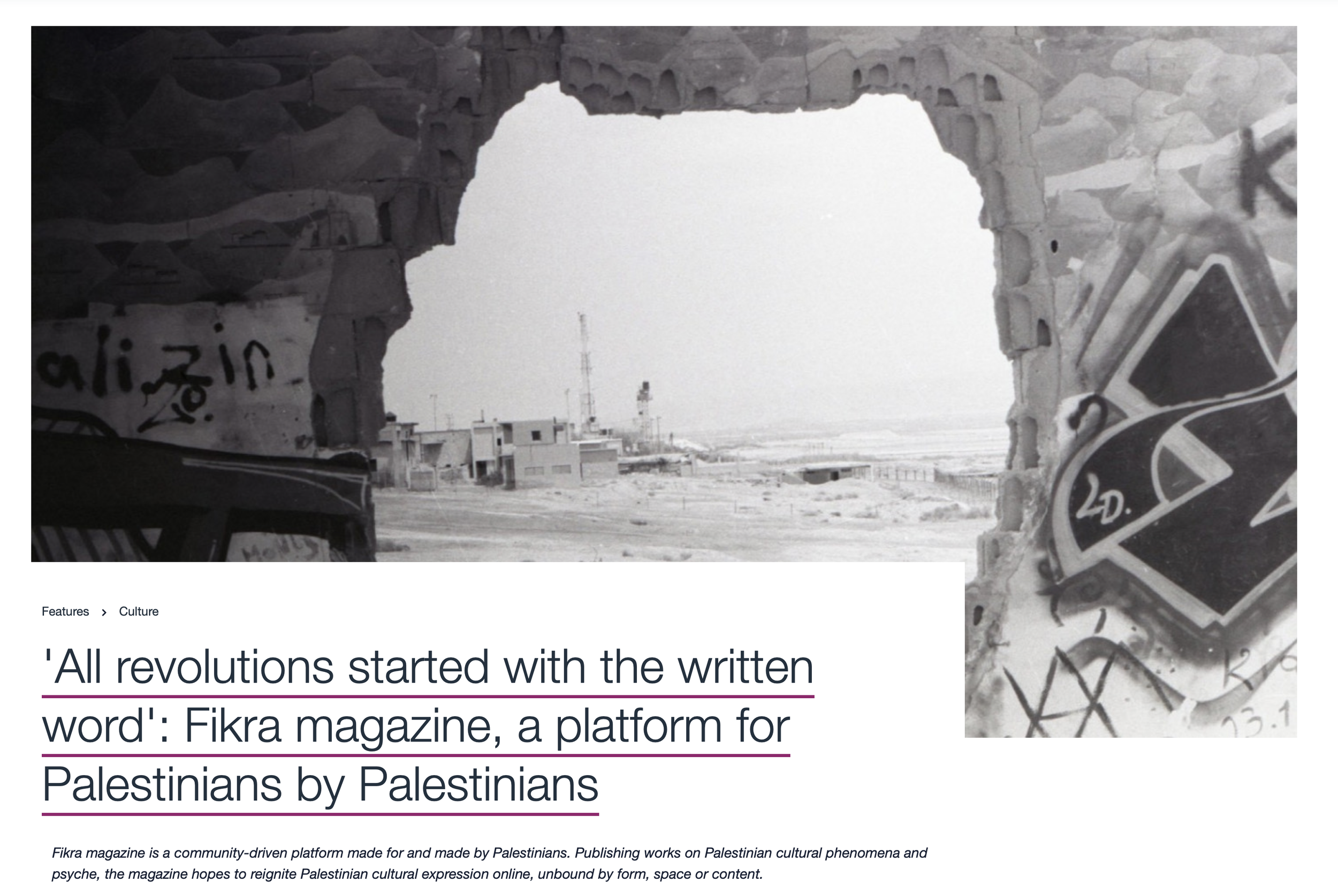
“All revolutions started with the written word”
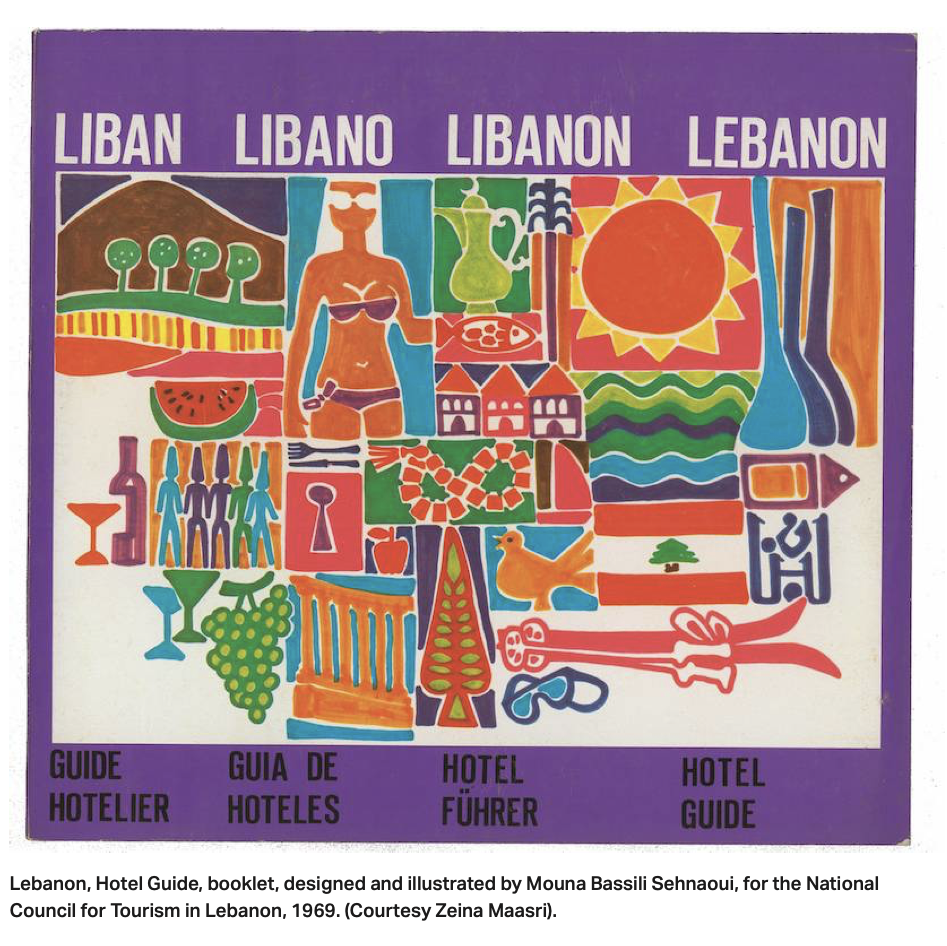
A people’s history of 1960s Beirut? Zeina Maasri illuminates a different ‘golden age’
Maasri sat down with L’Orient Today to discuss her latest award-winning book, Cosmopolitan Radicalism: The Visual Politics of Beirut's Global Sixties, the curse of Lebanon’s top-down “collective amnesia” and how studying everyday life during revolutions, war, and otherwise “anxious times” is a more compelling way of looking at history — compared to being led by official state narratives, say. In a country where tribal differences block consensus on an agreed-upon history book, what role can visual culture play in understanding local history? That’s the question that Maasri explores in her book.
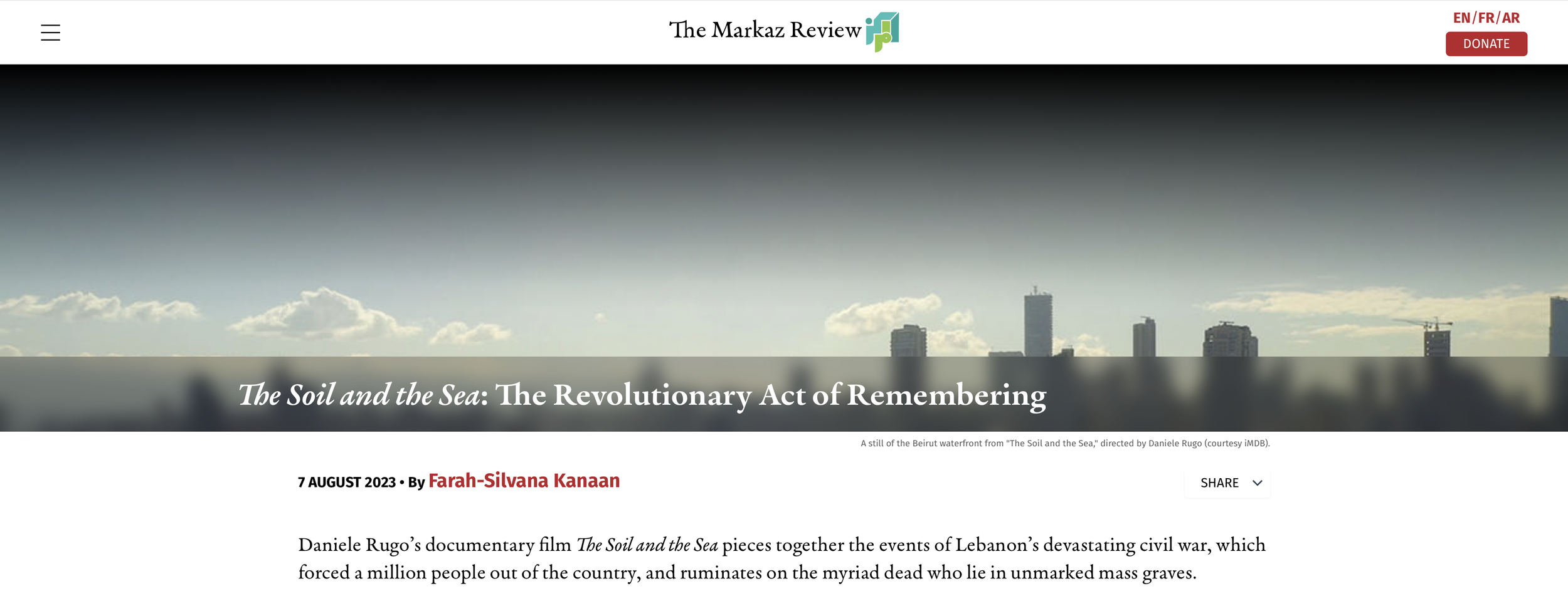
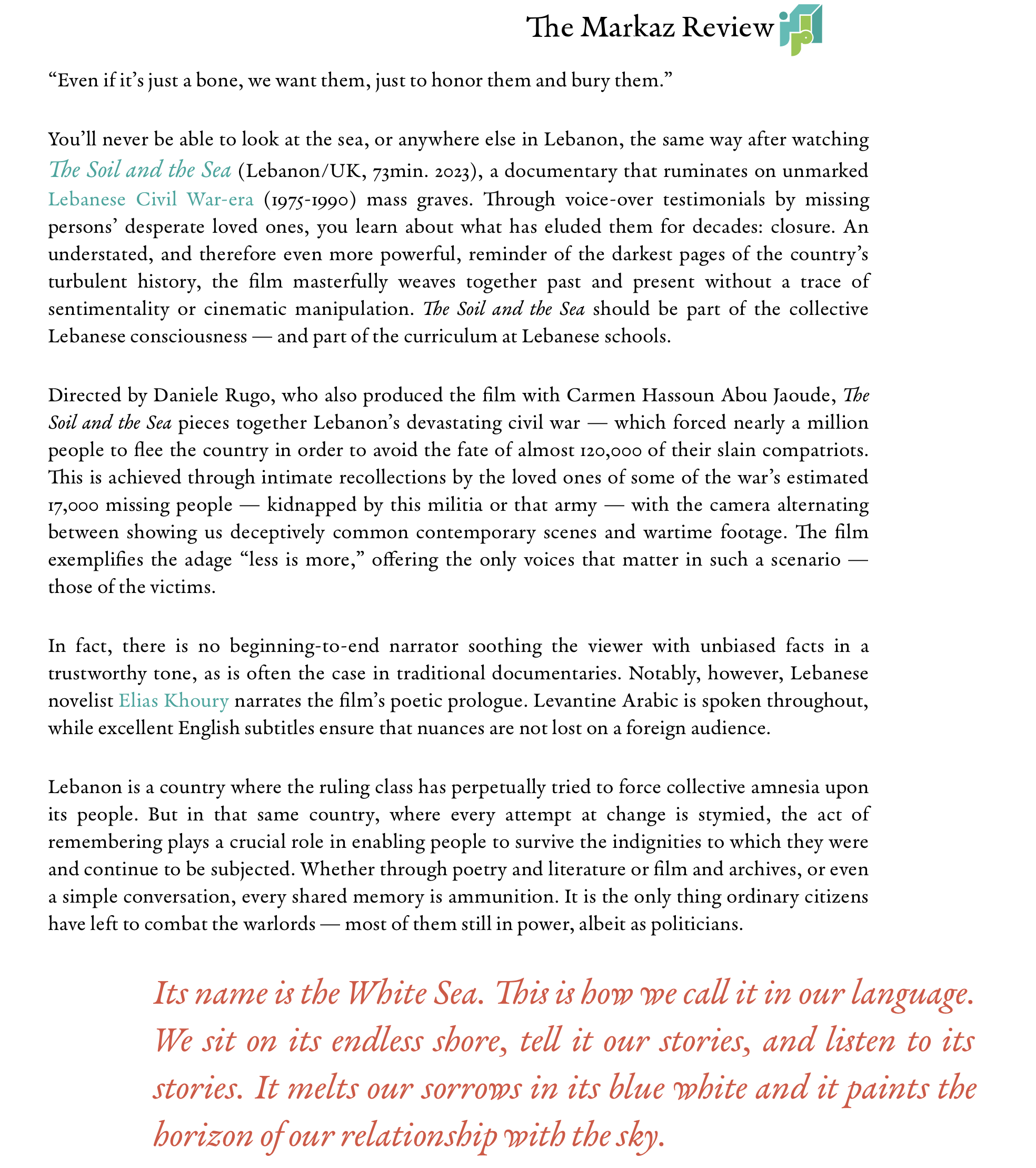
The Soil & the Sea
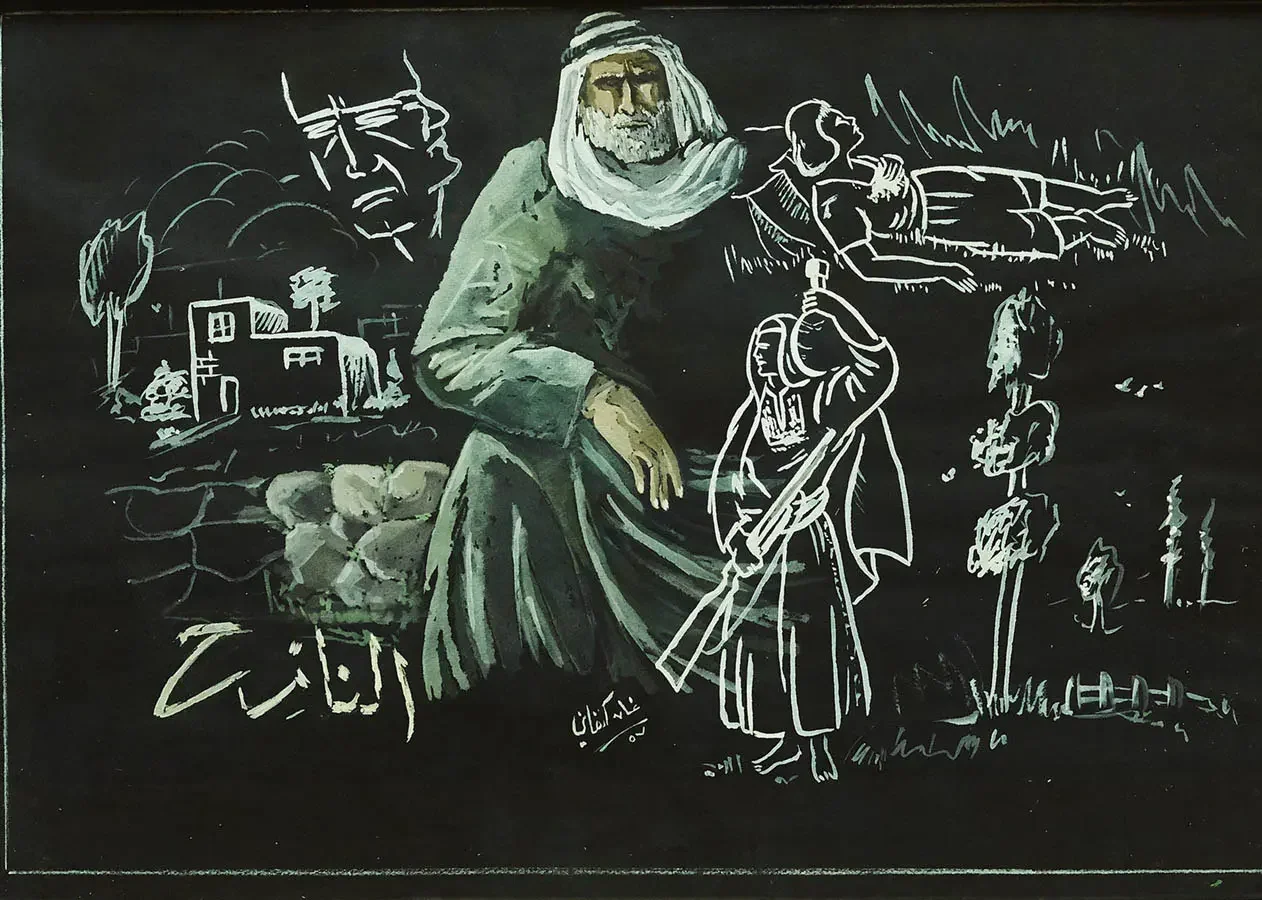
Ghassan Kanafani, "The Displaced," 1957. Courtesy of The Barjeel Art Foundation).
Resistance & Revolution: on Ghassan Kanafani
Resistance & Revolution: on Ghassan Kanafani
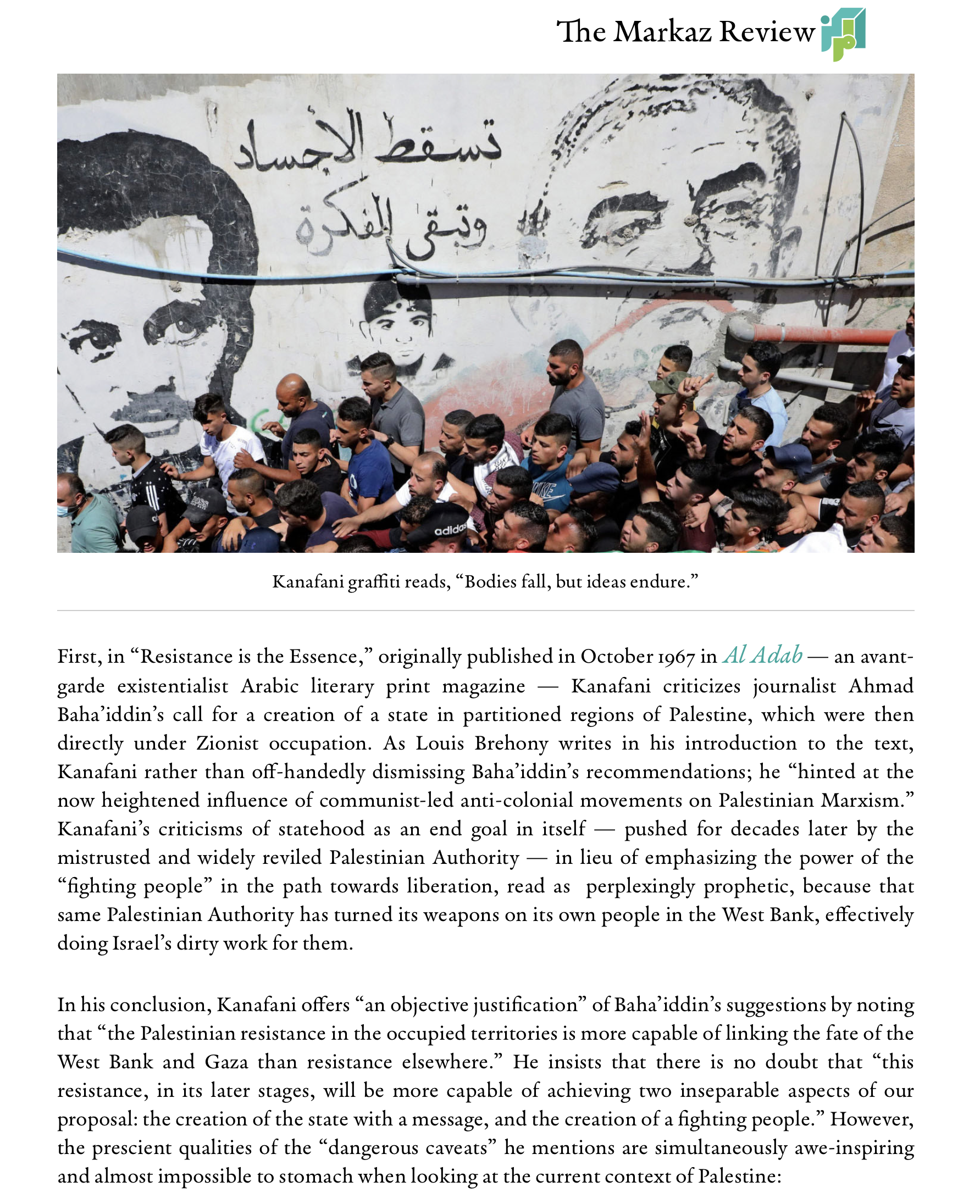
“Bodies fall, but ideas endure.”
The short but stunning line above has haunted us in heavy rotation the past 17 months. Whether in tributes on social media, on placards at protests, or peppered throughout personal conversations — in lamentation or in awe, or both — one of Palestine’s most memorable martyrs’ immortal words have been used to commemorate everyone from Yahya Sinwar and Refaat al-Areer to Sayyed Hassan Nasrallah, and the now hundreds of Palestinian journalists killed by the relentless Israeli murder machine.